Medicine, liquid, toxic, n.o.s
HMT May 2026- UN / ID
- UN 1851
- Hazard class
- 6.1
- Packing group
- II (multiple — see tabs)
- ERG guide
- ERG 151
- Special provisions
- —
- Source
- 49 CFR §172 (2026/05)
Medicine, liquid, toxic, n.o.s
Medicine is the science and practice of caring for patients, managing the diagnosis, prognosis, prevention, treatment and palliation of their injury or disease, while promoting their health. Medicine encompasses a variety of health care practices which evolved to maintain and restore health through the prevention and treatment of illness and infection. Contemporary medicine applies biomedical sciences, biomedical research, genetics, and medical technology to diagnose, treat, and prevent injury and disease, typically through various pharmaceuticals or surgery, but also through therapies such as psychotherapy, external splints and traction, medical devices, biologics, and ionizing radiation, amongst others. Medicine has been practiced since prehistoric times, and for most of this time it was an art (an area of creativity and skill), frequently having connections to the religious and philosophical beliefs of local culture. For example, a medicine man would apply herbs and say prayers for healing, or an ancient philosopher and physician would apply bloodletting according to the theories of humorism, or the four humors. Wikipedia
| Emergency Response Guide No. 151 |
Hazardous Materials Table
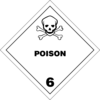
Source: 49 CFR §172 (2026/05)(3) Hazard Class6.1Poisonous Material |
(4) Identification number |
(5) Packing Group |
|||||||||
(6) Labels |
|||||||||||
(7) Special Provisions (§172.102)
|
|||||||||||
(8) Packing Authorizations (§173.***)
|
|||||||||||
| (8A) Exceptions | 153 | see 49 CFR §173.153 |
|---|---|---|
| (8B) Non-bulk | 202 | see 49 CFR §173.202 |
| (8C) Bulk | 243 | see 49 CFR §173.243 |
(9) Quantity Limits 
| (9A) Passenger aircraft/rail | 5 L |
|---|---|
| (9B) Cargo aircraft only | 60 L |
(10) Vessel stowage
| (10A) Location | |
|---|---|
| (10B) Other |
(3) Hazard Class6.1Poisonous Material |
(4) Identification number |
(5) Packing Group |
|||||||||
(6) Labels |
|||||||||||
(7) Special Provisions (§172.102)
|
|||||||||||
(8) Packing Authorizations (§173.***)
|
|||||||||||
| (8A) Exceptions | 153 | see 49 CFR §173.153 |
|---|---|---|
| (8B) Non-bulk | 203 | see 49 CFR §173.203 |
| (8C) Bulk | 241 | see 49 CFR §173.241 |
(9) Quantity Limits
| (9A) Passenger aircraft/rail | 60 L |
|---|---|
| (9B) Cargo aircraft only | 220 L |
(10) Vessel stowage
| (10A) Location | |
|---|---|
| (10B) Other |
Packing group comparison
Multiple packing groups apply to this entry. See assignment criteria in 49 CFR §173 Subpart D. Details are in the tabs above; differences are highlighted.
Segregation chart for load, transport, and storage
This chart shows whether loading, transport, or storage with other hazard classes is permitted, prohibited, or restricted. Based on 49 CFR §177.848.
Scope & sources (important)Click to show CFR references
This check evaluates segregation per 49 CFR §177.848. Additional loading/unloading and handling requirements may still apply; see 49 CFR §177 Subpart B (Loading and Unloading):
- §177.834 - General requirements
- §177.835 - Class 1 materials
- §177.837 - Class 3 materials
- §177.838 - Class 4 (flammable solid) materials, Class 5 (oxidizing) materials, and Division 4.2 (pyroforic liquid) materials
- §177.839 - Class 8 (corrosive) materials
- §177.840 - Class 2 (gases) materials
- §177.841 - Division 6.1 and Division 2.3 materials
- §177.842 - Class 7 (radioactive) material
- §177.843 - Contamination of vehicles