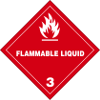
Denatured alcohol, also known as methylated spirits, metho, or meths in Australia, Ireland, New Zealand, South Africa, and the United Kingdom, and as denatured rectified spirit, is ethanol that has additives to make it poisonous, bad-tasting, foul-smelling, or nauseating to discourage its recreational consumption. It is sometimes dyed so that it can be identified visually. Pyridine and methanol, each and together, make denatured alcohol poisonous; denatonium makes it bitter.
Denatured alcohol is used as a solvent and as fuel for alcohol burners and camping stoves. Because of the diversity of industrial uses for denatured alcohol, hundreds of additives and denaturing methods have been used. Wikipedia
This entry is signed with "D". The letter "D" identifies proper shipping names which are appropriate for describing materials for domestic transportation but may be inappropriate for international transportation under the provisions of international regulations (e.g., IMO, ICAO). An alternate proper shipping name may be selected when either domestic or international transportation is involved.
×Note: Special provisions may be very complex. The extracts are taken from 49 CFR §172.102. Please be careful with the information, as necessary, additional conditions may be applied that are not written here. Please check the original source and report bugs.
(i) The material may be stowed “on deck” or “under deck” on a cargo vessel and on a passenger vessel carrying a number of passengers limited to not more than the larger of 25 passengers, or one passenger per each 3 m of overall vessel length; and
(ii) “On deck only” on passenger vessels in which the number of passengers specified in paragraph (k)(2)(i) of this section is exceeded.
This entry is signed with "D". The letter "D" identifies proper shipping names which are appropriate for describing materials for domestic transportation but may be inappropriate for international transportation under the provisions of international regulations (e.g., IMO, ICAO). An alternate proper shipping name may be selected when either domestic or international transportation is involved.
×Note: Special provisions may be very complex. The extracts are taken from 49 CFR §172.102. Please be careful with the information, as necessary, additional conditions may be applied that are not written here. Please check the original source and report bugs.
If the material has a flash point at or above 38 °C (100 °F) and below 93 °C (200 °F), then the bulk packaging requirements of §173.241 are applicable. If the material has a flash point of less than 38 °C (100 °F), then the bulk packaging requirements of §173.242 are applicable.
Multiple packing groups apply to this entry. See assignment criteria in 49 CFR §173 Subpart D. Details are in the tabs above; differences are highlighted.